
Senior Dog Food Labels: What “Complete and Balanced” Actually Promises Your Older Dog
Six bags, compared on the one line most owners never read: the AAFCO nutritional adequacy statement in small type on the back — the part of the label that tells you what the food has actually been shown to provide.
Specs last verified: September 2026. Formulas and guaranteed analysis values in this category change between production runs, so confirm the current label against the bag in front of you. Every figure below was checked against the manufacturer’s own site. Where a value is marked “Not listed online,” the brand’s page didn’t state it in readable text, and we left it blank rather than copy a figure from a third-party site.
Affiliate disclosure: This post may contain affiliate links. If you buy through one of them, we may earn a commission at no extra cost to you. That commission does not change which brands we cover or how we describe them, and none of the companies here reviewed or approved this article before publication. This guide is general information for dog owners, not veterinary advice — any diet change for an older dog, especially one with a diagnosed condition like kidney disease, should go through your own veterinarian first. Product names and logos are the property of their respective owners, and we are not affiliated with these companies beyond the affiliate relationships disclosed above. The five-bar scores are our own assessment of what each brand publishes on its label and product pages, not results from hands-on testing.
Three picks, three ways to read a label
Diamond Naturals Senior
The most transparent label here: protein, fat, calcium and phosphorus are all published as readable text on the brand’s own page, alongside a plain “maintenance” AAFCO statement.
Check current formulaHill’s Science Diet Adult 7+
Its label says the recipe passed “animal feeding tests using AAFCO procedures” — real-dog testing on top of the recipe calculation most bags rely on.
Check current formulaRoyal Canin Small Aging 12+
Names the oldest age tier directly and publishes a phosphorus minimum in plain text — while being clear that the regulated life stage underneath is still maintenance.
Check current formulaPurina Pro Plan Bright Mind Adult 7+, Blue Buffalo Life Protection Formula Senior, Iams ProActive Health Healthy Aging, Nutro’s senior lines and Eukanuba Senior are common on U.S. shelves, but we couldn’t confirm their current AAFCO statements from text on the brands’ sites at the time of writing, so we’ve left them out rather than guess. That’s a limit of what we could verify, not a judgment on the food — the two-minute check below works on any bag, including the one in your kitchen.
The Question You’re Actually Trying to Answer
Before you read another word: go find your own dog’s bag, flip it to the ingredient panel, and look for a short paragraph in small type that starts with either “is formulated to meet” or “animal feeding tests using AAFCO procedures.” That sentence is the label’s regulated nutrition promise. The rest of the bag isn’t a free-for-all — product names, ingredient lists and feeding directions all follow rules — but words like “senior,” “mature,” “7+” and “for aging dogs” have no standard regulatory definition, so two brands can use them to mean very different things.
If your bag looks different: AAFCO’s new label format is being phased in through 2030. On updated bags, an “intended use” statement appears on the lower part of the front panel, and the AAFCO statement sits inside a “Pet Nutrition Facts” box. The wording you’re looking for is the same — just in a new place.
That’s not a knock on any specific brand. It’s how U.S. pet food labeling actually works, and once you know it, a wall of competing bags gets a lot easier to read.
Here’s the reframe. Your dog’s age is a fact about your dog. “Senior,” “mature,” and “7+” are facts about marketing. The two are related, but they don’t have to match. Right now, for most bags on the shelf, they don’t.
What “Complete and Balanced” Legally Means — And What It Doesn’t Cover
The U.S. Food and Drug Administration is direct about what the phrase is actually promising: a “complete and balanced” pet food is one where “the product is intended to be fed as a pet’s sole diet and should be nutritionally balanced.” Nothing about age. Nothing about breed. Just: if this is all your dog eats, will it get everything it needs.
To back up that claim, a manufacturer has exactly two paths, per both the FDA and AAFCO (the Association of American Feed Control Officials, whose model standards U.S. states adopt into law): formulate to meet AAFCO’s published nutrient profiles for a given life stage (a calculation showing the recipe lands inside the required range), or pass an AAFCO feeding trial (a real study where dogs are fed the food and checked against health markers).
Both are legitimate, and each gets its own required label sentence, so you can tell which method a bag used just by reading the statement:
- Formulation method: “[Product name] is formulated to meet the nutritional levels established by the AAFCO Dog Food Nutrient Profiles for [life stage].”
- Feeding-trial method: “Animal feeding tests using AAFCO procedures substantiate that [product name] provides complete and balanced nutrition for [life stage].”
Now the part that surprises most owners: AAFCO’s nutrient profiles come in just two versions — growth and reproduction, and adult maintenance — and a “complete and balanced” label names the life stage it covers: gestation/lactation, growth, maintenance, or all life stages. “Senior” isn’t one of them. There is no regulated “senior” category a manufacturer can print on that statement, no matter what’s on the front of the bag.
So what does “senior” mean, if it’s not regulated? In practice, it’s the manufacturer’s own decision about ingredients and portion guidance, layered on top of a life stage that’s almost always just plain “maintenance” (the same stage a food for a healthy 3-year-old would use). Not automatically a problem, but “senior” tells you how the company positions the food, not a nutrient profile any two competitors must match.
Three Things to Check Before You Compare Any Two Bags
1. Which life stage does the statement actually name?
Read past “senior” on the front and find the real word on the back: maintenance, or all life stages. If it says maintenance, it’s built to the same regulatory floor as a bag with no age branding at all. If it says all life stages, it’s built to a different, higher standard: one written for puppies, not seniors, which is worth understanding before you assume “more” automatically means “better” for an older dog.
2. Was it substantiated by formulation or by a feeding trial?
A feeding trial means real dogs ate the food under AAFCO’s protocol, which many veterinary nutritionists see as extra evidence beyond a recipe calculation. It’s also less common: of the six formulas here, only one uses it. “Animal feeding tests” wording means a trial; “formulated to meet” means the formulation route. Both methods legally support “complete and balanced”; the trial simply adds a layer of real-world testing.
3. Does “all life stages” actually suit your specific dog?
This is the one that catches owners off guard. An all-life-stages statement means the food meets the growth-and-reproduction profile, which sets higher minimums than adult maintenance — including calcium (1.2% vs 0.5% on a dry-matter basis) and phosphorus (1.0% vs 0.4%) under AAFCO’s current dog nutrient profiles. That’s built for a growing puppy, not necessarily an older dog, and worth asking your vet about if your dog has, or is watched for, a kidney or mineral-sensitive condition. It isn’t unsafe for a healthy senior (plenty of owners feed it lifelong on purpose), but “all life stages” isn’t a synonym for “extra care for older dogs.” It’s closer to the opposite: a floor built for the most demanding life stage, not the gentlest.
The Bags at a Glance
How we scored: Label transparency and published nutrient detail reflect how much of the guaranteed analysis and AAFCO statement the brand publishes as readable text. “Life stage fit for a senior” reflects how closely the regulated life stage matches a typical healthy senior (maintenance scores higher than all life stages) — it is not a measure of food quality or safety. Scores are editorial judgments, not lab testing.
| Formula | Life stage | Substantiation | Protein / Fat (min) | Ca / P (min) | |
|---|---|---|---|---|---|
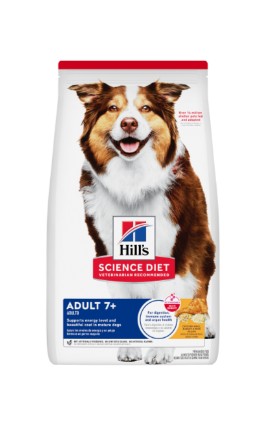
| Hill’s Science Diet Adult 7+ Chicken Meal, Barley & Rice |
Maintenance | Feeding trial | 18.7% / 13.5% (dry-matter avg.) |
1.15% / 0.68% (dry-matter avg.) |
View formula |
| Royal Canin Medium Adult 7+ | Maintenance | Formulation | 23.0% / 12.0% | Not listed online | View formula |
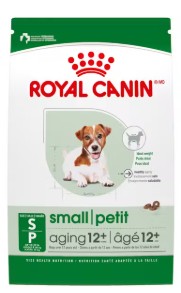
| Royal Canin Small Aging 12+ | Maintenance | Formulation | 24.0% / 12.0% | Not listed / 0.36% | View formula |
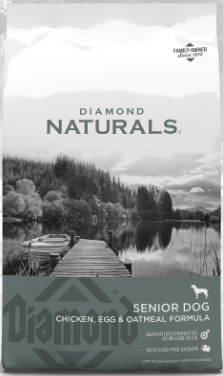
| Diamond Naturals Senior Chicken, Egg & Oatmeal |
Maintenance | Formulation | 25.0% / 11.0% | 1.1% / 0.8% | View formula |
| Diamond Naturals All Life Stages Chicken & Rice Contrast pick |
All life stages (incl. large-breed growth) | Formulation | 26.0% / 16.0% | Not listed online | View formula |
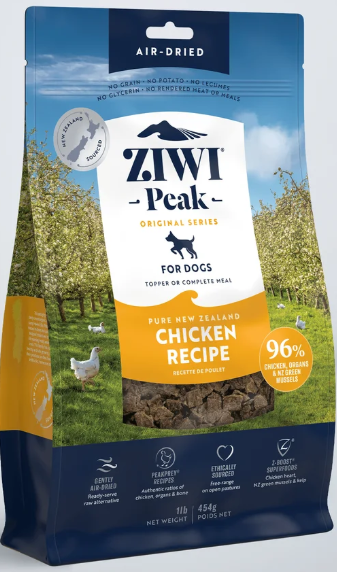
| ZIWI Peak Air-Dried Chicken | All life stages (ex. large-breed growth) | Formulation | 38.0% / 30.0% | Not listed online | View formula |
AAFCO statements are quoted verbatim from each manufacturer’s own product page, checked September 2026 (full wording in the reviews below). Guaranteed analysis values are published as-fed minimums, except Hill’s, which publishes dry-matter averages instead — so its row isn’t directly comparable to the others. ZIWI’s air-dried format also carries more moisture (14% max) than the kibbles (about 10%), so compare it on a dry-matter basis if the numbers matter to you. “Not listed online” means the value wasn’t stated in readable text on the page checked. Formulas change between production runs. Always confirm against the actual bag.
Reading the Formulas in Detail
Hill’s Science Diet Adult 7+ Chicken Meal, Barley & Rice
Uses the feeding-trial statement, not the formulation-only one: “Animal feeding tests using AAFCO procedures substantiate that Hill’s Science Diet Adult 7+ Chicken Meal, Barley & Rice Recipe Dog Food provides complete and balanced nutrition for maintenance of adult dogs.” The regulated life stage is maintenance, the same stage a general adult formula uses; “7+” is Hill’s own age guidance, not a distinct AAFCO category. Hill’s also publishes an unusually detailed nutrient table — calcium, phosphorus, potassium, sodium and magnesium among them — though as dry-matter averages rather than the as-fed minimums printed on most bags.
What works
- Uses the feeding-trial statement, which adds real-dog testing on top of the recipe calculation
- Detailed published nutrient table, including minerals most brands don’t list online
- Widely stocked in veterinary clinics
What to watch
- Hill’s publishes dry-matter averages rather than as-fed minimums, so its figures aren’t directly comparable to the other rows — check the guaranteed analysis on the bag for as-fed values
- Feeding trials test the specific formula that underwent the trial, so confirm the statement on your current bag still reads the same way if a recipe changes
Where it fits: Owners who want a formula backed by a feeding trial, understanding the underlying regulated claim is still “maintenance,” same as most of the category.
Royal Canin Medium Adult 7+ and Small Aging 12+
Both formulas use the formulation-method statement and land on the identical regulated life stage: maintenance. The only difference in the words themselves is the breed-size and age branding in the product name — “Medium Adult 7+” versus “Small Aging 12+” — not the underlying AAFCO promise. Guaranteed protein and fat minimums are published in plain text on both pages: 23.0% / 12.0% for Medium Adult 7+, 24.0% / 12.0% for Small Aging 12+, which also publishes a phosphorus minimum of 0.36%.
What works
- Clear age-bracket naming across the lineup (7+, then 12+ for the oldest tier)
- Protein, fat, and (for Small Aging 12+) phosphorus minimums published in plain text
- Widely available through veterinary clinics and major pet retailers
What to watch
- Calcium minimums for both formulas aren’t listed on the brand’s pages — check the bag
- Don’t assume “12+” implies a different nutrient profile from “7+” — both are maintenance. What differs is ingredient choices and portion guidance, not the AAFCO statement
Where it fits: Owners who want clear age-bracket naming across a lineup, understanding the regulated promise stays “maintenance” at every tier.
Diamond Naturals Senior vs. Diamond Naturals All Life Stages
This is the clearest side-by-side available from a single manufacturer: Diamond Naturals Senior (Chicken, Egg & Oatmeal) carries the plain maintenance statement, while Diamond Naturals All Life Stages (Chicken & Rice), the same house brand, carries the all-life-stages statement, including growth of large-breed dogs. The guaranteed analysis makes the practical difference visible: Senior publishes 25.0% protein / 11.0% fat / 1.1% calcium / 0.8% phosphorus (minimums), all on one page. All Life Stages publishes higher protein and fat minimums, 26.0% / 16.0%, consistent with a formula also built to satisfy a growing puppy.
Diamond Naturals Senior (Chicken, Egg & Oatmeal)
Diamond Naturals All Life Stages (Chicken & Rice) — contrast pick
What works
- Diamond Naturals Senior is one of the few formulas here where every core guaranteed-analysis figure — protein, fat, calcium, and phosphorus — is readable text on the brand’s own page
- The two lines let you see, from one manufacturer, exactly what changes and what doesn’t between a “senior” bag and an “all life stages” bag
- Both use the formulation method, the more common of the two routes and fully valid under AAFCO rules
What to watch
- Calcium and phosphorus minimums for the All Life Stages recipe aren’t listed on the brand’s page — check the bag
- Senior’s published calcium and phosphorus minimums are on the higher side for this group, which matters if your vet is watching mineral intake
- Neither product publishes a feeding-trial statement
Where it fits: Owners who want the most complete published label data, and anyone who wants to see exactly what changes, and what doesn’t, between a “senior” bag and an “all life stages” bag from the same company.
ZIWI Peak Air-Dried Chicken Recipe
An independent, premium-tier example of the all-life-stages statement, showing this pattern isn’t limited to one budget house brand: “ZIWI Peak Chicken Recipe is formulated to meet the nutritional levels established by the AAFCO Dog Food Nutrient Profiles for All Life Stages except for growth of large size dogs (70 lbs. or more as an adult).” Guaranteed minimums run noticeably higher than every maintenance-labeled formula here: 38.0% protein, 30.0% fat, as much a function of the air-dried, meat-forward format as the life-stage claim.
What works
- Confirms the all-life-stages pattern isn’t only a budget house-brand quirk
- Clear, quotable AAFCO statement, including the large-breed-growth exemption spelled out in full
- Meat-forward, air-dried format with high guaranteed protein and fat minimums
What to watch
- Calcium and phosphorus aren’t part of the guaranteed analysis on the product page — ZIWI’s separate typical-analysis page is the place to look
- The “except for growth of large size dogs” exemption means it’s not intended as a sole diet for a puppy that will mature past 70 lb
- Whether it suits your specific senior dog depends on kidney function, weight and activity level — a vet question, not one the AAFCO statement resolves
Where it fits: Owners already comfortable with a premium, meat-forward diet who want confirmation that “all life stages” isn’t only a budget-tier pattern.
Matching a Formula to Your Situation
Your vet has flagged an early kidney concern
This is the one situation where a label comparison shouldn’t drive the decision. Ask your vet whether a therapeutic kidney diet is appropriate — those are formulated differently from every over-the-counter bag here. If you’re asked to compare phosphorus between foods, convert to a dry-matter basis first, and remember guaranteed-analysis figures are minimums, not actual levels.
You want a formula backed by a feeding trial
Hill’s Science Diet Adult 7+ is the one formula here using the feeding-trial statement rather than formulation alone.
You want the most complete label data you can read online
Diamond Naturals Senior publishes protein, fat, calcium and phosphorus minimums side by side on its product page.
You’re comparing “senior” against “all life stages” and want to hold brand and format constant
Diamond Naturals’ two lines are the cleanest same-brand comparison available.
You want an independent brand’s take on all-life-stages, not tied to one house label
ZIWI Peak, keeping the large-breed-growth exemption in mind if a giant-breed puppy also shares the bowl.
Your dog is at the oldest end of the age range and you want a name that reflects it directly
Royal Canin’s Aging 12+ names the bracket explicitly, even though the regulated stage underneath is still maintenance.
You feed a brand not covered here
Run the same two-minute check yourself. Find the AAFCO statement, note which life stage it names and which substantiation method it used, and you’ve extracted the label’s regulated nutrition promise.
Common Questions
Is “senior” dog food a scam if AAFCO doesn’t regulate it?
It’s marketing, not fraud. Manufacturers can formulate ingredients and portion guidance around an older dog and market that as “senior”; the FDA and AAFCO simply don’t require a separate regulated category for it. The takeaway isn’t “avoid senior food,” it’s “don’t assume the word alone tells you the nutrient profile.” That’s also the honest answer to whether senior food is necessary at all: no label word makes it mandatory, so the real trigger for switching is a reason your vet has flagged (a weight change, a mobility issue, a diagnosed condition), not the dog’s age alone.
Should my older dog eat an “all life stages” food or a “maintenance” food?
There’s no universal answer: ask your vet, who knows your dog’s kidney function, weight and activity level. The tradeoff: all-life-stages meets a higher nutrient floor built around growth, which some healthy seniors do fine on and others don’t need; plain maintenance meets a lower floor built for a stable adult, which describes most healthy seniors.
Does “formulated to meet AAFCO nutrient profiles” mean the food was tested on dogs?
Not necessarily. That wording is the formulation method — a calculation showing the recipe falls within AAFCO’s required range. An actual feeding study uses different wording: “animal feeding tests using AAFCO procedures substantiate.” Both count as valid proof of “complete and balanced,” but they’re not the same process.
Why doesn’t this guide cover some major brands, like Purina or Blue Buffalo?
We only include formulas whose AAFCO statement and guaranteed analysis we could confirm as readable text on the manufacturer’s own site at the time of writing. For some major brands we couldn’t, so we left them out rather than paraphrase from a screenshot or a third-party listing. That’s a limit on what we could verify online, not a claim the food lacks a valid statement. Check the physical bag directly.
Does a higher protein or fat minimum automatically mean a better food for a senior dog?
Not by itself. Guaranteed analysis figures are minimums (or maximums, for fiber and moisture), not exact recipe percentages, and say nothing about ingredient quality or whether that level suits your dog. A senior dog with reduced kidney function may do better on a controlled rather than maximized protein level — a vet conversation using real bloodwork, not a label number to optimize alone.
Flip the bag, read the word after “for”
Every bag in this comparison is “complete and balanced” for the life stage its AAFCO statement names. None says “senior,” because that word isn’t a regulated life stage — it’s how the brand positions the food. What actually changes between bags is which life stage the statement names, whether that claim was proven by formulation or a feeding trial, and what the guaranteed analysis says once you go looking.
So here’s the two-minute version: find the sentence with “AAFCO” in it — on the back, or inside the Pet Nutrition Facts box on newer bags — and read the one word after “for.” That word, maintenance or all life stages, is the regulated fact about what’s in your dog’s bowl. The age words printed larger on the front have no standard definition. Both matter. Only one is checkable in thirty seconds, starting with the bag already in your kitchen.
See our top pick: Diamond Naturals SeniorAbout the author: By Shiori. As a devoted pet parent, I know how frustrating it is to search for clear, well-organized information on pet food and feeding choices. We built this site specifically for fellow pet lovers, spending hours researching label claims and comparing them against what manufacturers actually publish, to cut through the noise. Our goal is to organize that scattered data into honest, easy-to-read comparisons, saving you time and helping you make the best choices for your furry family members.
Related guides:
- Fresh Dog Food Subscriptions: How to Pick the Right One for Your Dog — the same AAFCO-statement check, applied to fresh and delivered plans.
- Is It Too Late to Insure an Older Dog? — what coverage looks like once your dog is past 7.


Leave a Reply