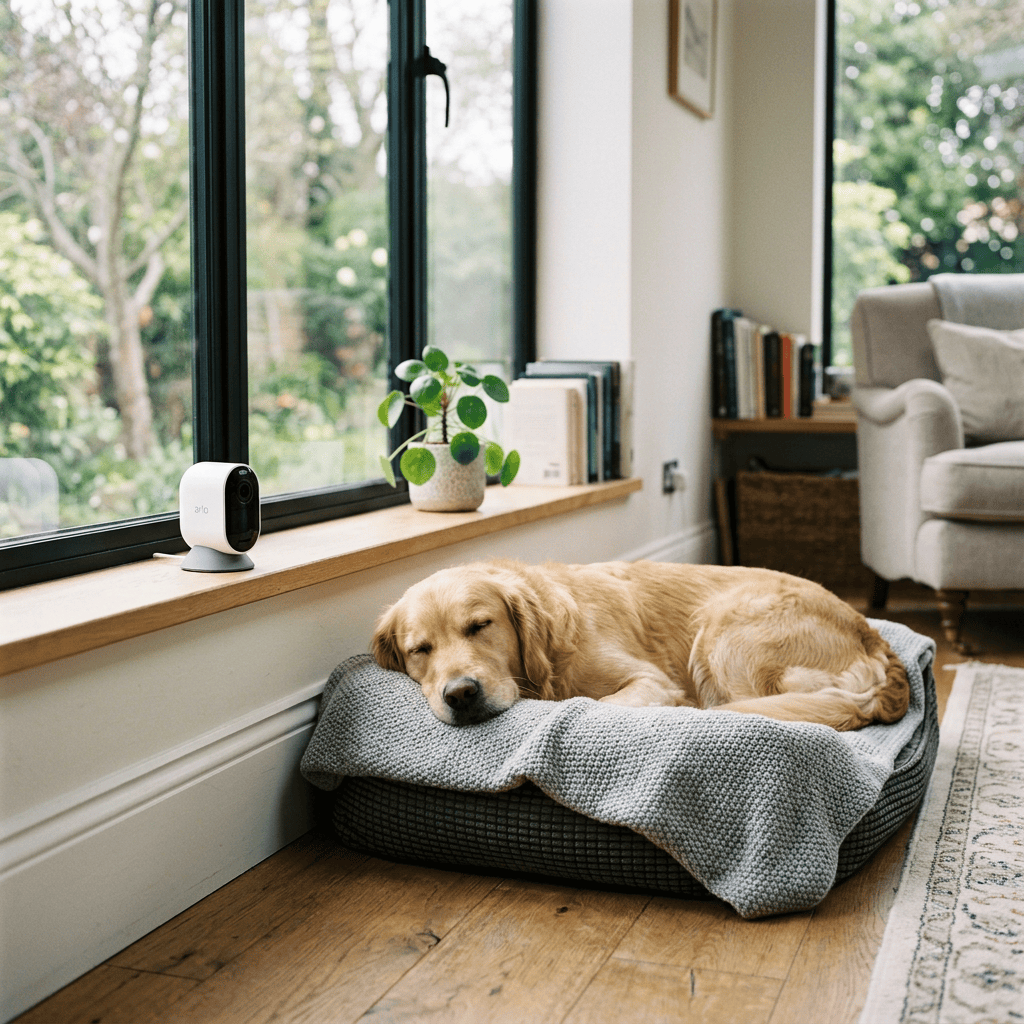
Furbo Dog Camera Review: How It Compares to Rivals
Five pet cameras, one real question: which one actually helps an anxious dog — not just lets you watch them pace.
Affiliate disclosure: This post may contain affiliate links. If you make a purchase through one of these links, we may earn a commission at no extra cost to you. No brand pays to be included or for its ranking, and none of the brands here reviewed or approved this article before publication. This comparison is built from each manufacturer’s own product pages and subscription terms, not hands-on testing, and the five-bar scores are our own assessment of those specs. How we make money.
Our three picks, by what you actually need
Furbo Dog Camera
The only pick here that lets you interrupt anxious behavior instead of just watching it. Treat toss plus bark-specific alerts.
Wyze Cam Pan v3
If your dog is relaxed alone and you just want eyes on the room, this does it for a fraction of the price.
Nooie Cam 360
Pan-and-tilt motion tracking is built to follow a dog who won’t stay in one spot, at a budget price.
Looking at more than these five? Our best pet cameras guide scores eight cameras, including cheaper models that record to a memory card with no monthly fee.
The problem: you can see your dog, but you can’t reach them
There’s a particular kind of guilt that comes with closing the front door and hearing a whine on the other side of it. Plenty of owners know the feeling — halfway to the car, already wondering how the next eight hours are going to go for the dog they just left behind.
It’s why so many people reach for a camera in the first place. But a camera that only shows you video leaves you watching a dog pace by the door with no way to do anything about it, which can make the guilt worse, not better.
That’s the core problem this whole category is trying to solve, and it’s worth naming before comparing anything: a pet camera that only shows you video is solving the wrong half of the problem. The harder half — the half that matters to your dog — is whether the camera lets you do something when you see them struggling.
That’s why these cameras aren’t interchangeable, even though they look similar on a spec sheet. Some are built for interaction. Others are security cameras with a paw-print sticker on the box. If you’re shopping for separation anxiety rather than general home monitoring, that distinction should drive your whole decision — more than resolution, more than brand, more than price.
Shopping for a cat instead? Everything here still applies, with two caveats. Mounting height matters more, since cats perch above eye level — check each camera’s field of view before you place it. And a treat toss is a far less reliable motivator for a cat than a dog, so don’t let that one feature decide it.
How we judged these
For a dog who struggles when left alone, three criteria matter far more than anything else on a spec sheet. Every score below is built from these three, using each company’s own product pages and subscription terms, and nothing else.
Two-way interaction, not just two-way audio
Plenty of cameras list “two-way audio,” but that alone only lets your voice into the room. For separation anxiety, what the camera lets you actually do — talk, toss a treat, redirect attention — matters more than resolution or field of view. A crystal-clear feed of a dog who has no idea you’re there solves nothing.
The real cost, not the sticker price
This is where people get burned. Several of these look affordable up front, then gate what you actually want — video history, smart alerts, pet detection — behind a monthly plan. Decide whether you’ll pay an ongoing fee before you compare hardware, because it changes which one is the better deal over a year or two. Check cancellation terms too: some bundles carry a minimum commitment with an early-exit penalty.
Alert intelligence, not alert volume
Every camera here will ping you when something moves. The question is whether it is designed to tell “the mail carrier walked by” from “my dog is howling and something is wrong.” Generic motion alerts either bury you in notifications until you mute them, or miss the moment that mattered. Whether a camera offers pet-specific sound detection is the single biggest gap between the cheapest options and the purpose-built ones.
Head-to-head comparison
| Camera | Interaction | Subscription | Alerts | Price | |
|---|---|---|---|---|---|
| Furbo Dog Camera | Audio + treat toss | Optional; needed for full history | Bark, howl, unusual sound | Mid–Upper | Check price |
| Petcube Cam | Audio only on base model | Needed for cloud storage | Barking, meowing, pets vs people | Budget–Mid | Check price |
| Wyze Cam Pan v3 | Audio only | Optional, inexpensive | Pet detection with Cam Plus | Budget | Check price |
| Nooie Cam 360 | Audio + pan/tilt tracking | Optional | Motion tracking | Budget | Check price |
| Ring Indoor Cam | Audio only | Effectively required | Security-tuned, not pet | Budget | Check price |
Price is shown as a range rather than a dollar figure, because pricing shifts with sales far more often than hardware does. One note on Petcube: you can buy its cameras outright, but Petcube also sells a Care Bundle where the camera comes with a plan from $5.99 a month. That bundle runs for twelve months — cancel earlier and Petcube charges the camera’s full price, which it lists as $39.99 for the Cam and $99.95 for the Bites 2 Lite. Checked September 2026.
The five, scored

The treat toss is the whole argument for this camera. It turns the device from something that reports a problem into something that can interrupt one. Paired with two-way audio, it gives you a way to respond when a bark alert comes in, rather than only watching.
What works
- Treat toss gives you an action to take, not just a feed to watch
- Bark- and howl-specific detection rather than generic motion alerts
- Two-way audio for talking to your dog from anywhere
- App built for pet behavior, not adapted from security
What doesn’t
- Costs more up front than general-purpose cameras
- Video history and person alerts need an ongoing subscription
- Treat compartment needs refilling and cleaning
See current Furbo pricing
Opens Furbo’s official site
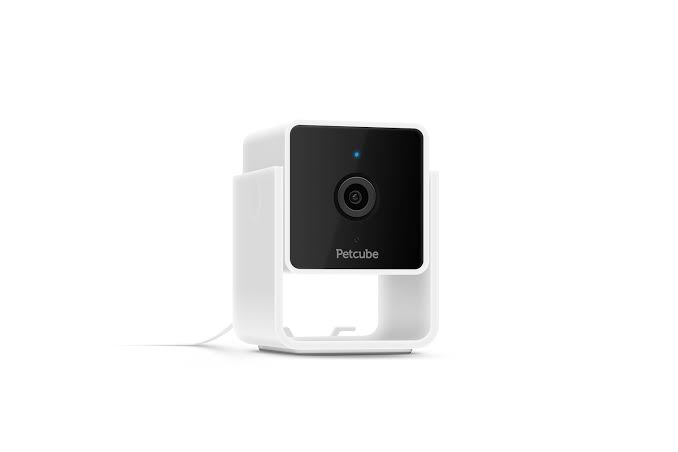
The closest thing here to a direct competitor in spirit — built for pets, not repurposed from security hardware. Its alerts recognize barking and meowing and separate pets from people, and some models swap the treat dispenser for a laser pointer, which is the right call for a dog who chases more than they snack.
What works
- Bark and meow recognition, with no subscription required
- Laser pointer on some models for interactive play
- App designed around pets rather than home security
What doesn’t
- No treat toss on most models
- No person or emergency-sound alerts of the kind Furbo’s plan adds
- The Care Bundle locks you in for twelve months
See current Petcube pricing
Opens Petcube’s official site
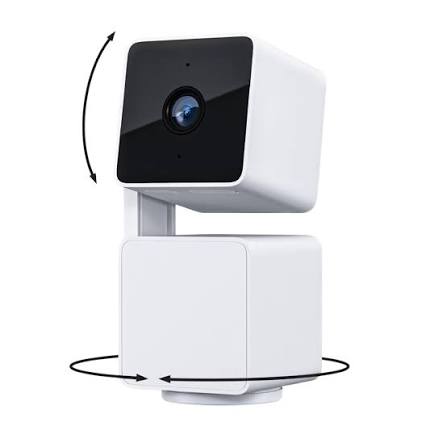
This isn’t a fair fight, and it isn’t meant to be. Wyze is a general security camera that happens to work fine for casual pet monitoring, and its Cam Plus plan adds pet detection for a few dollars a month. If all you need is “can I see my dog,” it does that for a fraction of the price. If you need a way to respond when your dog is struggling, it doesn’t have the tools.
What works
- Extremely affordable for what you get
- Pan and tilt covers more of a room than fixed cameras
- Records to a memory card, and the plan is optional and cheap
What doesn’t
- No treat feature, and nothing to reach your dog with but your voice
- Pet detection sits behind the paid tier
- A general security camera, with no pet-specific hardware
See current Wyze pricing
Opens Wyze’s official site
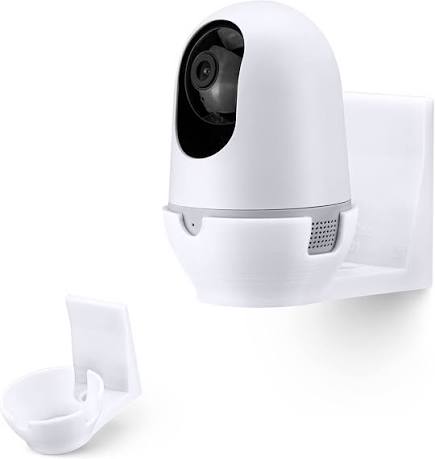
Nooie’s pan-and-tilt motion tracking is designed to follow a moving pet around the room rather than wait for it to walk into a fixed frame. For a dog who paces rather than settles in one spot, that’s a real advantage — it just stops there. No dispenser, and no pet-specific sound detection.
What works
- Motion tracking suited to dogs who move around a lot
- Reasonably priced for the feature set
- Two-way audio included
What doesn’t
- General motion alerts rather than bark detection
- No treat dispenser
- Fewer pet-focused app features than Furbo or Petcube
See current Nooie pricing
Opens Nooie’s official site
Ring makes sense as a bonus if you’re already invested in the ecosystem for home security. As a dedicated pet-anxiety tool it isn’t designed for the job: no treat feature, and detection is built around motion and people rather than the sounds that signal a dog in distress.
What works
- Doubles as a general home security camera
- Familiar app if you already use Ring
- Fits into an existing Ring setup
What doesn’t
- Not built with pet behavior in mind at all
- A Ring Home plan is close to essential for real value
- Two-way audio works more like an intercom than a pet tool
See current Ring pricing
Opens Ring’s official site
Furbo vs the others, one on one
Furbo vs Petcube
Both are built for pets rather than repurposed from security hardware, and both listen for barking. This comes down to the treat toss: Furbo includes it standard, most Petcube models don’t, and some add a laser pointer instead. Food-motivated dog, take Furbo. Toy-driven dog or a cat, the laser is worth a look.
Furbo vs Wyze Cam Pan v3
Wyze is a general security camera that works fine for casual monitoring. Furbo is purpose-built for an anxious dog. Just need eyes on the room? Wyze, for far less. Need a way to respond when your dog is struggling? Wyze doesn’t have the tools.
Furbo vs Nooie Cam 360
Nooie’s motion tracking is a genuine advantage for a pacer. But there’s no dispenser, and no bark-specific detection. A nice bonus, not a replacement for the interactive piece.
Furbo vs Ring Indoor Cam
Worth it as an add-on if you’re already in the Ring ecosystem. As a pet-anxiety tool, this comparison isn’t close: no treat feature, and detection is tuned for people and general motion rather than distress behavior.
What setup actually looks like
None of these need technical skill, but the process differs. Furbo’s setup covers mounting height and treat loading, because both affect toss accuracy — too low and treats bounce off furniture, too high and the throw loses aim. Petcube and Nooie use a similar plug-in-and-pair process, and most base models have no dispenser to set up. Wyze and Ring have the least to configure.
One thing that trips people up: several models here connect only to 2.4GHz Wi-Fi, not 5GHz — and this varies by model even within a brand, so check the spec sheet for your exact version. If your router broadcasts both bands under one network name, you may need to split them temporarily during setup or the camera won’t find your network at all.
Trials, returns, and where your video goes
Free trials. Furbo includes a free trial of its Nanny plan with every camera, and Petcube and Ring have both offered trials with a device purchase. Trial lengths change with promotions, so check the current offer before you subscribe rather than assuming a fixed window.
Returns. None of these brands publish a return policy meaningfully different from wherever you buy — a standard 30-day window through Amazon, Chewy, or the retailer’s own site is the norm across the category.
Your footage. Furbo, Petcube and Ring stream through the manufacturer’s cloud, which is worth knowing before you install one in a room you spend time in yourself. Wyze and Nooie can record to a memory card instead. Before buying, check whether the company states clips are auto-deleted rather than stored indefinitely, whether footage is sold to third parties, and whether the account supports two-factor authentication — a more meaningful safeguard than encryption marketing copy.
A realistic expectation. None of these replace behavioral training or, in more serious cases, a conversation with your vet or a certified trainer. A camera helps you interrupt anxious behavior and gives you visibility you didn’t have. It isn’t a guaranteed fix on its own.
Questions people ask before buying
Is Furbo a dog camera you can talk through in real time, or is there a delay?
Any camera that sends two-way audio over Wi-Fi has some delay, and how much depends on your connection. Furbo doesn’t publish a latency figure, so treat it as near-real-time rather than instant.
What’s the best pet camera with a treat dispenser if budget isn’t a concern?
Furbo, because the treat toss is paired with bark and howl detection rather than bolted onto a basic camera as a novelty. If budget is a concern, the Petcube Bites 2 Lite tosses treats for well under half the price — we compare both in our best pet cameras guide.
Do I need a subscription for any of these to be useful?
No, but the definition of “useful” changes. All five give you live view and basic alerts for free, and Petcube includes its bark and meow recognition with no plan. For saved video history, Furbo, Petcube and Wyze gate that behind an optional plan, and Ring effectively requires one. One catch is specific to Furbo: it sells the camera as a Standalone model and as a cheaper Subscribe & Save model, and only the Standalone one keeps working without paying, because the Subscribe & Save price has the plan built into it. We go through what every camera here does with no subscription, and which ones owe nothing at all.
Will a treat-tossing camera fix separation anxiety by itself?
No. It gives you a way to interrupt anxious behavior in the moment, which is a real tool — but it works alongside training, not instead of it.
For an anxious dog, Furbo is still the one
For the specific problem of an anxious dog and a guilty owner, Furbo is the only camera here built around doing something, not just seeing something: a treat toss, two-way audio and bark-specific alerts in one device. The budget options aren’t bad — they’re built for a calmer situation.
Whichever one fits your dog, the real test isn’t the spec sheet. It’s whether your dog visibly relaxes the first time they hear your voice come through it. For the wider field, including cameras that cost nothing monthly, see our best pet cameras guide.


Leave a Reply